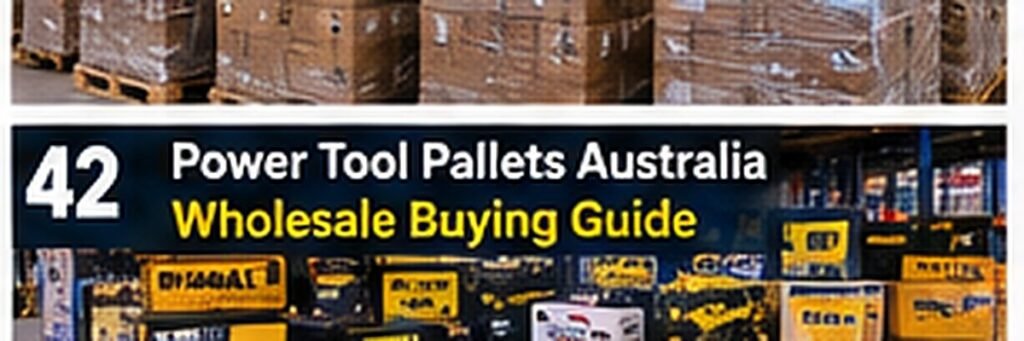
Power Tool Pallets Australia: Wholesale Buying Guide for Resellers
Searching for tool pallets for sale usually means you are no longer just curious about liquidation stock—you are trying to understand what to buy, what to pay, what condition to expect and how the stock could fit a real resale business. In Australia, liquidation inventory can include customer returns, overstock, shelf-pulls, clearance merchandise, open-box products, surplus stock and mixed wholesale lots. The opportunity can be attractive, but the buying decision should be based on the exact lot rather than on a headline discount alone.
This guide explains the practical side of tool pallets for sale for Australian resellers, retailers, online sellers, market traders and small businesses. It is designed to help you compare listings more carefully, understand the questions worth asking before payment, and connect the purchase price with freight, testing, storage and resale. If you are currently comparing available stock, you can also browse the Australia Pallet Liquidation store and review current listings alongside the principles in this article.
Understanding tool pallets for sale
Tool pallets can contain strong resale categories, but buyers should check whether products are bare tools or kits, whether batteries and chargers are included, and whether condition is new, returned, open-box or untested.
Liquidation inventory enters the secondary market for many reasons. Retailers may have excess seasonal stock, discontinued ranges, packaging changes, customer returns, warehouse overstocks or products that no longer fit current merchandising plans. Those reasons matter because they influence condition and resale preparation. A pallet of clean overstock is very different from a mixed customer-return lot, even if both contain products from similar categories.
Before comparing prices, identify the lot type. Look for words such as new overstock, shelf-pull, customer returns, open box, tested, untested, manifested and unmanifested. These are not interchangeable descriptions. A clear listing should help you understand what the seller knows about the goods and what remains uncertain.
What Australian Buyers Should Check Before Ordering
The first check is the actual inventory information. Read the product title, description, condition notes, photographs and manifest where one is supplied. If the listing gives model numbers or estimated quantities, compare those details with your intended resale channels. For higher-value categories, a smaller pallet with clearer information can sometimes be easier to manage than a much larger mixed lot.
The second check is condition. Ask whether items have been tested, whether accessories are included and whether packaging damage is cosmetic or could indicate product damage. If a lot is sold as mixed condition, build that uncertainty into your buying price. A reseller should not calculate expected revenue as though every item will sell at full retail.
The third check is logistics. Pallet freight is different from ordinary parcel shipping. Confirm the destination postcode, whether the delivery address is commercial or residential, whether a forklift is available, and whether a tail-lift or depot collection may be required. Review the site’s delivery information before treating the listed pallet price as the final landed cost.
How to Compare the Real Cost of a Pallet
A useful comparison starts with landed cost rather than purchase price. Landed cost can include the pallet price, freight, taxes where applicable, payment charges, unloading, storage, testing, cleaning, minor repairs, replacement packaging and marketplace selling fees. The importance of each cost depends on the category. Electronics may require testing and accessories; appliances may require more storage and expensive local delivery; clothing may require sorting by size and season.
Build a simple worksheet before buying. Estimate a conservative sellable quantity, an average realistic selling price, direct selling fees and a reserve for damaged or slow-moving goods. This is more useful than multiplying the number of items by their original recommended retail price. Original retail value can be useful as a reference, but liquidation buyers make money by understanding achievable resale value.
Cash flow also matters. A pallet that takes four months to sell may be less attractive than a slightly lower-margin pallet that sells in four weeks. Consider how quickly you can photograph, list, store and dispatch the stock. The best purchase is the one that fits your operation, not simply the one with the largest advertised retail value.
Choosing Stock for Your Resale Channel
Your sales channel should influence your buying decision. Facebook Marketplace and local classifieds can work well for bulky products because buyers can collect. eBay and other national marketplaces can work well for branded items with clear model numbers and manageable shipping dimensions. A physical discount shop or market stall may perform better with broad mixed merchandise, household goods, clothing, tools or impulse-buy products.
Think about the information your own customer will need. If you cannot identify the model, test the item or describe its condition confidently, the product may take longer to sell. Likewise, if you specialise in one category, a mixed pallet can leave you with unrelated products that require new selling channels. Buyers who already have broad customer demand may benefit from variety; specialist resellers often benefit from consistency.
For additional background about the business and the type of wholesale stock offered, visit the About Australia Pallet Liquidation page. Current stock can change frequently, so category fit should always be checked against the live product listing.
Questions to Ask a Pallet Supplier
Useful questions are practical and lot-specific. Ask what condition category applies, whether the lot is manifested, whether item counts are exact or estimated, whether products have been tested, what accessories are included, and whether the photographs show the actual lot. For unmanifested stock, ask what the seller can reasonably confirm without expecting an exact inventory that does not exist.
Also ask about collection and freight. Confirm approximate pallet dimensions and weight where available, whether pallets can be stacked, how many pallets fit the order, and what unloading equipment may be needed. For higher-value orders, request the invoice and ensure the business details and delivery information are correct before paying.
If you need clarification on a current listing, use the contact page rather than relying on assumptions. Good purchasing decisions usually come from resolving uncertainty before the pallet leaves the warehouse.
Common Mistakes to Avoid
One common mistake is buying solely because the discount looks large. A pallet advertised with a high original retail value can still be difficult to resell if the products are obsolete, incomplete, damaged, highly seasonal or expensive to ship. Another mistake is ignoring labour. Sorting, testing, cleaning, photographing and listing hundreds of items can consume significant time.
New buyers also sometimes purchase too much inventory too quickly. It can be more useful to learn from one manageable lot, record actual sell-through and then increase order size. This creates real data about your average selling price, defect rate, labour time and preferred categories.
Finally, do not confuse a liquidation sale with a guarantee of profit. Resale results depend on the individual lot, the buyer’s sales channels, local demand and operating costs. Treat every purchase as an inventory decision that needs its own numbers.
Building a Repeatable Buying Process
A repeatable process makes liquidation buying easier to scale. Start by defining the categories you understand, the maximum amount of cash you want tied up in stock, and the minimum information you require before buying. Then record every purchase with its pallet cost, freight, item count, test results, sales revenue, selling fees and remaining stock.
After several purchases, patterns become visible. You may find that certain categories sell faster, that particular price bands produce better margins, or that some freight routes are more economical. Those observations are more valuable than generic claims about which pallets are “best.” Your own sales history should become the basis for future buying decisions.
Internal linking also helps buyers move from research to action. After reading this guide, review the current pallet inventory, check freight and delivery information, and use the contact page if you need lot-specific information before ordering.
Frequently Asked Questions About tool pallets for sale
Is liquidation stock suitable for first-time resellers?
It can be, provided the first order is manageable and the buyer understands the condition and category. Beginners often benefit from stock they already know how to test, price and sell.
Should I buy manifested or unmanifested pallets?
Manifested pallets provide more inventory detail, while unmanifested lots may offer a different price and risk profile. The better option depends on how much uncertainty your business can handle.
How do I know whether a pallet is good value?
Compare landed cost with conservative resale value rather than original retail value alone. Include freight, fees, testing, labour and an allowance for damaged or slow-moving items.
Can pallets be delivered across Australia?
Delivery options depend on the current order, destination, pallet size, freight provider and unloading requirements. Check the delivery information and request a current quote where required.
Where can I see available liquidation pallets?
Visit the Australia Pallet Liquidation store for current listings. Availability changes as lots sell and new inventory arrives.
Final Thoughts
Power Tool Pallets Australia: Wholesale Buying Guide for Resellers is ultimately about making a disciplined inventory decision. Good buyers combine clear condition information, realistic resale pricing, manageable freight and a sales channel that suits the merchandise. They also leave room for imperfect items and slower-moving stock rather than assuming every unit will sell immediately.
If you are researching tool pallets for sale, use this article as a checklist rather than a promise of a particular margin. Review each live listing on its own merits, calculate the landed cost for your location, and match the lot to the customers you already know how to reach. When you are ready to compare current options, browse the store or contact Australia Pallet Liquidation for order-specific information.
Related search terms: liquidation pallets Australia, wholesale pallets Australia, return pallets for sale Australia, bulk merchandise for resale, wholesale liquidation stock, pallets for resellers.