Ryobi tool pallets
-
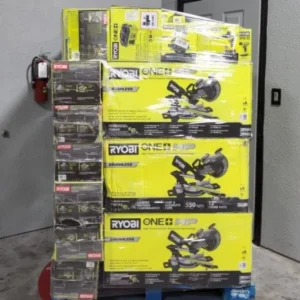
Ryobi Oscillating Tool Lots
Ryobi tool pallets Price range: $300.00 through $1,200.00Full pallet (100 items)Half pallet (50 items)Mini pallet (25 items)ClearOpen box -
Ryobi Power Tool Pallets
Ryobi tool pallets Price range: $700.00 through $2,800.00Full pallet (200 items)Half pallet (100 items)Mini pallet (50 items)ClearOpen box
Ryobi tool pallets in Australia – Wholesale Pallets, Lots & Reseller Stock
If you are researching Ryobi tool pallets for resale, retail stock, online selling or business inventory, this guide from Australia Pallet Liquidations is designed to help you evaluate the category carefully. The products assigned to this category in the current catalogue include Ryobi Oscillating Tool Lots, Ryobi Power Tool Pallets. Stock availability changes, so examples on this page should be treated as category context rather than a promise that every item is available at all times.
Buyers commonly search for terms such as Ryobi tool pallets Australia, wholesale Ryobi tool pallets, buy Ryobi tool pallets Australia, Ryobi tool pallets pallets, liquidation pallets Australia and wholesale stock for resellers. The useful answer to those searches is more than a list of keywords. Buyers need to understand condition, lot size, freight, manifests, expected handling work, resale channels and the way those factors affect landed cost. This page brings those considerations together so you can compare the current products with your own business model.
Learn more about Australia Pallet Liquidations or contact us when you need current lot information, photos, freight details or clarification about a listing.
Understanding this category: Ryobi tool palletsFor buyers researching ryobi tool pallets in Australia, the most useful starting point is not a headline discount but a clear understanding of the lot being offered. Australia Pallet Liquidations uses this category page to help buyers compare wholesale stock with the information available for each listing. The practical details can include tool model, voltage platform, battery and charger inclusion, kit contents, bare-tool status, accessories, packaging, visible wear, testing status and whether mixed models are included. Those details matter because tool lots can contain a mix of bare tools, kits, batteries and accessories; margin depends on matching components correctly and separating fully usable stock from incomplete or repair-grade units. A buyer who records the purchase cost, freight, handling time and likely selling fees can judge the opportunity more realistically than a buyer who compares only a pallet price with an estimated retail value. The purpose of this section is to make what buyers should expect when evaluating the category and why the category can suit different resale models easier to evaluate before an order is placed. Where a product listing gives more specific information than this guide, the listing should be treated as the primary source for that lot.The market for ryobi tool pallets can serve tradies, tool resellers, hardware retailers, online sellers, market traders and businesses building value-focused tool inventory. Different buyers can look at the same stock and reach different conclusions because their sales channels, storage space, labour and customer base are different. A marketplace seller may prefer individually listable products, while a physical retailer may value a consistent category mix that can be priced quickly. A regional buyer may also face a different freight equation from a buyer close to a major metro area. That is why what buyers should expect when evaluating the category and why the category can suit different resale models should be considered together with destination, lot size and the buyer’s actual resale process. There is no universal margin that applies to every liquidation lot. Useful purchasing decisions come from combining lot-specific information with the buyer’s own sales history and cost structure.When comparing ryobi tool pallets, condition language deserves careful attention. Terms such as new, overstock, shelf-pull, open-box, customer return, mixed condition or untested can describe materially different stock. Photos and manifests can add useful context, but they do not replace the need to read the individual listing and ask questions when something important is unclear. Buyers should confirm tool model, voltage platform, battery and charger inclusion, kit contents, bare-tool status, accessories, packaging, visible wear, testing status and whether mixed models are included. This is particularly important for ryobi tool pallets because tool lots can contain a mix of bare tools, kits, batteries and accessories; margin depends on matching components correctly and separating fully usable stock from incomplete or repair-grade units. Clear grading after arrival also improves downstream customer trust. Instead of using vague labels, resellers can define their own condition standards and apply them consistently across listings.Who buys this stock: Ryobi tool palletsA disciplined buyer evaluates ryobi tool pallets as inventory, not as a lottery ticket. Start with the landed cost: purchase price plus freight, payment charges where applicable, unloading, storage, testing, cleaning, packaging, marketplace fees and expected returns. Next, estimate a conservative selling range using recent comparable sales in the channels you actually use. Then allow for slow movers and products that may need discounting, repair, bundling or parts recovery. This method is slower than relying on a headline RRP figure, but it gives a stronger basis for deciding whether buyer types, business models, stock-turn expectations and the practical differences between small resellers and larger trade buyers makes commercial sense. It also makes it easier to compare one category with another over several buying cycles.Operational discipline can turn a difficult lot of ryobi tool pallets into manageable inventory. Sort by battery platform and model family first, then verify kit completeness, test moving parts and power functions where practical, clean and photograph each unit, and clearly state whether batteries, chargers and cases are included. A simple stock sheet with item name, condition, cost allocation, listing date, sale price and fees can show which parts of the lot are performing. This helps the buyer avoid a common mistake: remembering only the best sales while forgetting unsold units and labour. The same records can guide the next purchase. If one size, model family, style or product type sells consistently faster, future sourcing can become more selective and less speculative.Australia’s geography means logistics should be part of the purchase decision for ryobi tool pallets. A pallet that works financially for a metropolitan delivery may need a different calculation for a regional or remote postcode. Buyers should confirm the delivery postcode, whether the address is residential or commercial, unloading access, forklift or tail-lift needs where relevant, and any restrictions for bulky or fragile freight. Australia Pallet Liquidations encourages buyers to request current delivery information for the specific order rather than assume that one freight rule applies everywhere. Careful planning is especially valuable when stock is bulky, time-sensitive or difficult to store.Condition, manifests and lot information: Ryobi tool palletsSearch terms such as 'ryobi tool pallets Australia', 'wholesale ryobi tool pallets', 'buy ryobi tool pallets Australia' and 'ryobi tool pallets for resellers' often represent the same underlying need: buyers want suitable stock, enough information to judge it, and a practical path from purchase to resale. This page therefore focuses on buyer questions rather than repeating keywords unnaturally. Google’s own guidance favours helpful, people-first content, and the same principle is useful for customers. A category page should explain what the stock is, who it may suit, what to inspect, how to estimate costs and where to find the current listings. That approach makes the page more useful whether the visitor arrives from search, a product page or an internal link.For buyers researching ryobi tool pallets in Australia, the most useful starting point is not a headline discount but a clear understanding of the lot being offered. Australia Pallet Liquidations uses this category page to help buyers compare wholesale stock with the information available for each listing. The practical details can include tool model, voltage platform, battery and charger inclusion, kit contents, bare-tool status, accessories, packaging, visible wear, testing status and whether mixed models are included. Those details matter because tool lots can contain a mix of bare tools, kits, batteries and accessories; margin depends on matching components correctly and separating fully usable stock from incomplete or repair-grade units. A buyer who records the purchase cost, freight, handling time and likely selling fees can judge the opportunity more realistically than a buyer who compares only a pallet price with an estimated retail value. The purpose of this section is to make how condition grades, manifests, photos and listing-specific information should be read before purchase easier to evaluate before an order is placed. Where a product listing gives more specific information than this guide, the listing should be treated as the primary source for that lot.The market for ryobi tool pallets can serve tradies, tool resellers, hardware retailers, online sellers, market traders and businesses building value-focused tool inventory. Different buyers can look at the same stock and reach different conclusions because their sales channels, storage space, labour and customer base are different. A marketplace seller may prefer individually listable products, while a physical retailer may value a consistent category mix that can be priced quickly. A regional buyer may also face a different freight equation from a buyer close to a major metro area. That is why how condition grades, manifests, photos and listing-specific information should be read before purchase should be considered together with destination, lot size and the buyer’s actual resale process. There is no universal margin that applies to every liquidation lot. Useful purchasing decisions come from combining lot-specific information with the buyer’s own sales history and cost structure.How to assess value before buying: Ryobi tool palletsWhen comparing ryobi tool pallets, condition language deserves careful attention. Terms such as new, overstock, shelf-pull, open-box, customer return, mixed condition or untested can describe materially different stock. Photos and manifests can add useful context, but they do not replace the need to read the individual listing and ask questions when something important is unclear. Buyers should confirm tool model, voltage platform, battery and charger inclusion, kit contents, bare-tool status, accessories, packaging, visible wear, testing status and whether mixed models are included. This is particularly important for ryobi tool pallets because tool lots can contain a mix of bare tools, kits, batteries and accessories; margin depends on matching components correctly and separating fully usable stock from incomplete or repair-grade units. Clear grading after arrival also improves downstream customer trust. Instead of using vague labels, resellers can define their own condition standards and apply them consistently across listings.A disciplined buyer evaluates ryobi tool pallets as inventory, not as a lottery ticket. Start with the landed cost: purchase price plus freight, payment charges where applicable, unloading, storage, testing, cleaning, packaging, marketplace fees and expected returns. Next, estimate a conservative selling range using recent comparable sales in the channels you actually use. Then allow for slow movers and products that may need discounting, repair, bundling or parts recovery. This method is slower than relying on a headline RRP figure, but it gives a stronger basis for deciding whether cost-per-unit thinking, realistic resale estimates, labour, fees, freight, storage and a margin-of-safety approach makes commercial sense. It also makes it easier to compare one category with another over several buying cycles.Operational discipline can turn a difficult lot of ryobi tool pallets into manageable inventory. Sort by battery platform and model family first, then verify kit completeness, test moving parts and power functions where practical, clean and photograph each unit, and clearly state whether batteries, chargers and cases are included. A simple stock sheet with item name, condition, cost allocation, listing date, sale price and fees can show which parts of the lot are performing. This helps the buyer avoid a common mistake: remembering only the best sales while forgetting unsold units and labour. The same records can guide the next purchase. If one size, model family, style or product type sells consistently faster, future sourcing can become more selective and less speculative.Resale channels in Australia: Ryobi tool palletsAustralia’s geography means logistics should be part of the purchase decision for ryobi tool pallets. A pallet that works financially for a metropolitan delivery may need a different calculation for a regional or remote postcode. Buyers should confirm the delivery postcode, whether the address is residential or commercial, unloading access, forklift or tail-lift needs where relevant, and any restrictions for bulky or fragile freight. Australia Pallet Liquidations encourages buyers to request current delivery information for the specific order rather than assume that one freight rule applies everywhere. Careful planning is especially valuable when stock is bulky, time-sensitive or difficult to store.Search terms such as 'ryobi tool pallets Australia', 'wholesale ryobi tool pallets', 'buy ryobi tool pallets Australia' and 'ryobi tool pallets for resellers' often represent the same underlying need: buyers want suitable stock, enough information to judge it, and a practical path from purchase to resale. This page therefore focuses on buyer questions rather than repeating keywords unnaturally. Google’s own guidance favours helpful, people-first content, and the same principle is useful for customers. A category page should explain what the stock is, who it may suit, what to inspect, how to estimate costs and where to find the current listings. That approach makes the page more useful whether the visitor arrives from search, a product page or an internal link.For buyers researching ryobi tool pallets in Australia, the most useful starting point is not a headline discount but a clear understanding of the lot being offered. Australia Pallet Liquidations uses this category page to help buyers compare wholesale stock with the information available for each listing. The practical details can include tool model, voltage platform, battery and charger inclusion, kit contents, bare-tool status, accessories, packaging, visible wear, testing status and whether mixed models are included. Those details matter because tool lots can contain a mix of bare tools, kits, batteries and accessories; margin depends on matching components correctly and separating fully usable stock from incomplete or repair-grade units. A buyer who records the purchase cost, freight, handling time and likely selling fees can judge the opportunity more realistically than a buyer who compares only a pallet price with an estimated retail value. The purpose of this section is to make how online marketplaces, independent retail, market stalls and specialist channels can require different pricing and presentation easier to evaluate before an order is placed. Where a product listing gives more specific information than this guide, the listing should be treated as the primary source for that lot.Online marketplaces for individually listed stock.Independent retail stores and category specialists.Market stalls, pop-up retail and local selling.Business-to-business resale where appropriate.Bundles or multi-buy offers for slower-moving inventory.Receiving, sorting and grading: Ryobi tool palletsThe market for ryobi tool pallets can serve tradies, tool resellers, hardware retailers, online sellers, market traders and businesses building value-focused tool inventory. Different buyers can look at the same stock and reach different conclusions because their sales channels, storage space, labour and customer base are different. A marketplace seller may prefer individually listable products, while a physical retailer may value a consistent category mix that can be priced quickly. A regional buyer may also face a different freight equation from a buyer close to a major metro area. That is why a repeatable warehouse or home-business workflow for intake, sorting, inspection, grading and record keeping should be considered together with destination, lot size and the buyer’s actual resale process. There is no universal margin that applies to every liquidation lot. Useful purchasing decisions come from combining lot-specific information with the buyer’s own sales history and cost structure.When comparing ryobi tool pallets, condition language deserves careful attention. Terms such as new, overstock, shelf-pull, open-box, customer return, mixed condition or untested can describe materially different stock. Photos and manifests can add useful context, but they do not replace the need to read the individual listing and ask questions when something important is unclear. Buyers should confirm tool model, voltage platform, battery and charger inclusion, kit contents, bare-tool status, accessories, packaging, visible wear, testing status and whether mixed models are included. This is particularly important for ryobi tool pallets because tool lots can contain a mix of bare tools, kits, batteries and accessories; margin depends on matching components correctly and separating fully usable stock from incomplete or repair-grade units. Clear grading after arrival also improves downstream customer trust. Instead of using vague labels, resellers can define their own condition standards and apply them consistently across listings.A disciplined buyer evaluates ryobi tool pallets as inventory, not as a lottery ticket. Start with the landed cost: purchase price plus freight, payment charges where applicable, unloading, storage, testing, cleaning, packaging, marketplace fees and expected returns. Next, estimate a conservative selling range using recent comparable sales in the channels you actually use. Then allow for slow movers and products that may need discounting, repair, bundling or parts recovery. This method is slower than relying on a headline RRP figure, but it gives a stronger basis for deciding whether a repeatable warehouse or home-business workflow for intake, sorting, inspection, grading and record keeping makes commercial sense. It also makes it easier to compare one category with another over several buying cycles.Product photography and listings: Ryobi tool palletsOperational discipline can turn a difficult lot of ryobi tool pallets into manageable inventory. Sort by battery platform and model family first, then verify kit completeness, test moving parts and power functions where practical, clean and photograph each unit, and clearly state whether batteries, chargers and cases are included. A simple stock sheet with item name, condition, cost allocation, listing date, sale price and fees can show which parts of the lot are performing. This helps the buyer avoid a common mistake: remembering only the best sales while forgetting unsold units and labour. The same records can guide the next purchase. If one size, model family, style or product type sells consistently faster, future sourcing can become more selective and less speculative.Australia’s geography means logistics should be part of the purchase decision for ryobi tool pallets. A pallet that works financially for a metropolitan delivery may need a different calculation for a regional or remote postcode. Buyers should confirm the delivery postcode, whether the address is residential or commercial, unloading access, forklift or tail-lift needs where relevant, and any restrictions for bulky or fragile freight. Australia Pallet Liquidations encourages buyers to request current delivery information for the specific order rather than assume that one freight rule applies everywhere. Careful planning is especially valuable when stock is bulky, time-sensitive or difficult to store.Search terms such as 'ryobi tool pallets Australia', 'wholesale ryobi tool pallets', 'buy ryobi tool pallets Australia' and 'ryobi tool pallets for resellers' often represent the same underlying need: buyers want suitable stock, enough information to judge it, and a practical path from purchase to resale. This page therefore focuses on buyer questions rather than repeating keywords unnaturally. Google’s own guidance favours helpful, people-first content, and the same principle is useful for customers. A category page should explain what the stock is, who it may suit, what to inspect, how to estimate costs and where to find the current listings. That approach makes the page more useful whether the visitor arrives from search, a product page or an internal link.Pricing and inventory turnover: Ryobi tool palletsFor buyers researching ryobi tool pallets in Australia, the most useful starting point is not a headline discount but a clear understanding of the lot being offered. Australia Pallet Liquidations uses this category page to help buyers compare wholesale stock with the information available for each listing. The practical details can include tool model, voltage platform, battery and charger inclusion, kit contents, bare-tool status, accessories, packaging, visible wear, testing status and whether mixed models are included. Those details matter because tool lots can contain a mix of bare tools, kits, batteries and accessories; margin depends on matching components correctly and separating fully usable stock from incomplete or repair-grade units. A buyer who records the purchase cost, freight, handling time and likely selling fees can judge the opportunity more realistically than a buyer who compares only a pallet price with an estimated retail value. The purpose of this section is to make pricing ladders, bundles, clearance decisions, sell-through and avoiding the trap of valuing every item at full retail easier to evaluate before an order is placed. Where a product listing gives more specific information than this guide, the listing should be treated as the primary source for that lot.The market for ryobi tool pallets can serve tradies, tool resellers, hardware retailers, online sellers, market traders and businesses building value-focused tool inventory. Different buyers can look at the same stock and reach different conclusions because their sales channels, storage space, labour and customer base are different. A marketplace seller may prefer individually listable products, while a physical retailer may value a consistent category mix that can be priced quickly. A regional buyer may also face a different freight equation from a buyer close to a major metro area. That is why pricing ladders, bundles, clearance decisions, sell-through and avoiding the trap of valuing every item at full retail should be considered together with destination, lot size and the buyer’s actual resale process. There is no universal margin that applies to every liquidation lot. Useful purchasing decisions come from combining lot-specific information with the buyer’s own sales history and cost structure.When comparing ryobi tool pallets, condition language deserves careful attention. Terms such as new, overstock, shelf-pull, open-box, customer return, mixed condition or untested can describe materially different stock. Photos and manifests can add useful context, but they do not replace the need to read the individual listing and ask questions when something important is unclear. Buyers should confirm tool model, voltage platform, battery and charger inclusion, kit contents, bare-tool status, accessories, packaging, visible wear, testing status and whether mixed models are included. This is particularly important for ryobi tool pallets because tool lots can contain a mix of bare tools, kits, batteries and accessories; margin depends on matching components correctly and separating fully usable stock from incomplete or repair-grade units. Clear grading after arrival also improves downstream customer trust. Instead of using vague labels, resellers can define their own condition standards and apply them consistently across listings.Freight, storage and handling: Ryobi tool palletsA disciplined buyer evaluates ryobi tool pallets as inventory, not as a lottery ticket. Start with the landed cost: purchase price plus freight, payment charges where applicable, unloading, storage, testing, cleaning, packaging, marketplace fees and expected returns. Next, estimate a conservative selling range using recent comparable sales in the channels you actually use. Then allow for slow movers and products that may need discounting, repair, bundling or parts recovery. This method is slower than relying on a headline RRP figure, but it gives a stronger basis for deciding whether freight quotes, access requirements, pallet handling, storage planning, weather protection and damage prevention makes commercial sense. It also makes it easier to compare one category with another over several buying cycles.Operational discipline can turn a difficult lot of ryobi tool pallets into manageable inventory. Sort by battery platform and model family first, then verify kit completeness, test moving parts and power functions where practical, clean and photograph each unit, and clearly state whether batteries, chargers and cases are included. A simple stock sheet with item name, condition, cost allocation, listing date, sale price and fees can show which parts of the lot are performing. This helps the buyer avoid a common mistake: remembering only the best sales while forgetting unsold units and labour. The same records can guide the next purchase. If one size, model family, style or product type sells consistently faster, future sourcing can become more selective and less speculative.Australia’s geography means logistics should be part of the purchase decision for ryobi tool pallets. A pallet that works financially for a metropolitan delivery may need a different calculation for a regional or remote postcode. Buyers should confirm the delivery postcode, whether the address is residential or commercial, unloading access, forklift or tail-lift needs where relevant, and any restrictions for bulky or fragile freight. Australia Pallet Liquidations encourages buyers to request current delivery information for the specific order rather than assume that one freight rule applies everywhere. Careful planning is especially valuable when stock is bulky, time-sensitive or difficult to store.Risk management for liquidation buyers: Ryobi tool palletsSearch terms such as 'ryobi tool pallets Australia', 'wholesale ryobi tool pallets', 'buy ryobi tool pallets Australia' and 'ryobi tool pallets for resellers' often represent the same underlying need: buyers want suitable stock, enough information to judge it, and a practical path from purchase to resale. This page therefore focuses on buyer questions rather than repeating keywords unnaturally. Google’s own guidance favours helpful, people-first content, and the same principle is useful for customers. A category page should explain what the stock is, who it may suit, what to inspect, how to estimate costs and where to find the current listings. That approach makes the page more useful whether the visitor arrives from search, a product page or an internal link.For buyers researching ryobi tool pallets in Australia, the most useful starting point is not a headline discount but a clear understanding of the lot being offered. Australia Pallet Liquidations uses this category page to help buyers compare wholesale stock with the information available for each listing. The practical details can include tool model, voltage platform, battery and charger inclusion, kit contents, bare-tool status, accessories, packaging, visible wear, testing status and whether mixed models are included. Those details matter because tool lots can contain a mix of bare tools, kits, batteries and accessories; margin depends on matching components correctly and separating fully usable stock from incomplete or repair-grade units. A buyer who records the purchase cost, freight, handling time and likely selling fees can judge the opportunity more realistically than a buyer who compares only a pallet price with an estimated retail value. The purpose of this section is to make variation between lots, returns, missing pieces, testing requirements, fraud prevention and conservative planning easier to evaluate before an order is placed. Where a product listing gives more specific information than this guide, the listing should be treated as the primary source for that lot.The market for ryobi tool pallets can serve tradies, tool resellers, hardware retailers, online sellers, market traders and businesses building value-focused tool inventory. Different buyers can look at the same stock and reach different conclusions because their sales channels, storage space, labour and customer base are different. A marketplace seller may prefer individually listable products, while a physical retailer may value a consistent category mix that can be priced quickly. A regional buyer may also face a different freight equation from a buyer close to a major metro area. That is why variation between lots, returns, missing pieces, testing requirements, fraud prevention and conservative planning should be considered together with destination, lot size and the buyer’s actual resale process. There is no universal margin that applies to every liquidation lot. Useful purchasing decisions come from combining lot-specific information with the buyer’s own sales history and cost structure.Building repeatable sourcing: Ryobi tool palletsWhen comparing ryobi tool pallets, condition language deserves careful attention. Terms such as new, overstock, shelf-pull, open-box, customer return, mixed condition or untested can describe materially different stock. Photos and manifests can add useful context, but they do not replace the need to read the individual listing and ask questions when something important is unclear. Buyers should confirm tool model, voltage platform, battery and charger inclusion, kit contents, bare-tool status, accessories, packaging, visible wear, testing status and whether mixed models are included. This is particularly important for ryobi tool pallets because tool lots can contain a mix of bare tools, kits, batteries and accessories; margin depends on matching components correctly and separating fully usable stock from incomplete or repair-grade units. Clear grading after arrival also improves downstream customer trust. Instead of using vague labels, resellers can define their own condition standards and apply them consistently across listings.A disciplined buyer evaluates ryobi tool pallets as inventory, not as a lottery ticket. Start with the landed cost: purchase price plus freight, payment charges where applicable, unloading, storage, testing, cleaning, packaging, marketplace fees and expected returns. Next, estimate a conservative selling range using recent comparable sales in the channels you actually use. Then allow for slow movers and products that may need discounting, repair, bundling or parts recovery. This method is slower than relying on a headline RRP figure, but it gives a stronger basis for deciding whether keeping purchasing records, tracking sell-through, identifying categories that fit the buyer and improving future buying decisions makes commercial sense. It also makes it easier to compare one category with another over several buying cycles.Operational discipline can turn a difficult lot of ryobi tool pallets into manageable inventory. Sort by battery platform and model family first, then verify kit completeness, test moving parts and power functions where practical, clean and photograph each unit, and clearly state whether batteries, chargers and cases are included. A simple stock sheet with item name, condition, cost allocation, listing date, sale price and fees can show which parts of the lot are performing. This helps the buyer avoid a common mistake: remembering only the best sales while forgetting unsold units and labour. The same records can guide the next purchase. If one size, model family, style or product type sells consistently faster, future sourcing can become more selective and less speculative.Australia-focused buying considerations: Ryobi tool palletsAustralia’s geography means logistics should be part of the purchase decision for ryobi tool pallets. A pallet that works financially for a metropolitan delivery may need a different calculation for a regional or remote postcode. Buyers should confirm the delivery postcode, whether the address is residential or commercial, unloading access, forklift or tail-lift needs where relevant, and any restrictions for bulky or fragile freight. Australia Pallet Liquidations encourages buyers to request current delivery information for the specific order rather than assume that one freight rule applies everywhere. Careful planning is especially valuable when stock is bulky, time-sensitive or difficult to store.Search terms such as 'ryobi tool pallets Australia', 'wholesale ryobi tool pallets', 'buy ryobi tool pallets Australia' and 'ryobi tool pallets for resellers' often represent the same underlying need: buyers want suitable stock, enough information to judge it, and a practical path from purchase to resale. This page therefore focuses on buyer questions rather than repeating keywords unnaturally. Google’s own guidance favours helpful, people-first content, and the same principle is useful for customers. A category page should explain what the stock is, who it may suit, what to inspect, how to estimate costs and where to find the current listings. That approach makes the page more useful whether the visitor arrives from search, a product page or an internal link.For buyers researching ryobi tool pallets in Australia, the most useful starting point is not a headline discount but a clear understanding of the lot being offered. Australia Pallet Liquidations uses this category page to help buyers compare wholesale stock with the information available for each listing. The practical details can include tool model, voltage platform, battery and charger inclusion, kit contents, bare-tool status, accessories, packaging, visible wear, testing status and whether mixed models are included. Those details matter because tool lots can contain a mix of bare tools, kits, batteries and accessories; margin depends on matching components correctly and separating fully usable stock from incomplete or repair-grade units. A buyer who records the purchase cost, freight, handling time and likely selling fees can judge the opportunity more realistically than a buyer who compares only a pallet price with an estimated retail value. The purpose of this section is to make distance, freight zones, state and territory differences, regional deliveries and the importance of checking current terms easier to evaluate before an order is placed. Where a product listing gives more specific information than this guide, the listing should be treated as the primary source for that lot.Questions to ask before ordering: Ryobi tool palletsThe market for ryobi tool pallets can serve tradies, tool resellers, hardware retailers, online sellers, market traders and businesses building value-focused tool inventory. Different buyers can look at the same stock and reach different conclusions because their sales channels, storage space, labour and customer base are different. A marketplace seller may prefer individually listable products, while a physical retailer may value a consistent category mix that can be priced quickly. A regional buyer may also face a different freight equation from a buyer close to a major metro area. That is why specific questions that reduce uncertainty about condition, lot makeup, shipping, documentation and suitability should be considered together with destination, lot size and the buyer’s actual resale process. There is no universal margin that applies to every liquidation lot. Useful purchasing decisions come from combining lot-specific information with the buyer’s own sales history and cost structure.When comparing ryobi tool pallets, condition language deserves careful attention. Terms such as new, overstock, shelf-pull, open-box, customer return, mixed condition or untested can describe materially different stock. Photos and manifests can add useful context, but they do not replace the need to read the individual listing and ask questions when something important is unclear. Buyers should confirm tool model, voltage platform, battery and charger inclusion, kit contents, bare-tool status, accessories, packaging, visible wear, testing status and whether mixed models are included. This is particularly important for ryobi tool pallets because tool lots can contain a mix of bare tools, kits, batteries and accessories; margin depends on matching components correctly and separating fully usable stock from incomplete or repair-grade units. Clear grading after arrival also improves downstream customer trust. Instead of using vague labels, resellers can define their own condition standards and apply them consistently across listings.A disciplined buyer evaluates ryobi tool pallets as inventory, not as a lottery ticket. Start with the landed cost: purchase price plus freight, payment charges where applicable, unloading, storage, testing, cleaning, packaging, marketplace fees and expected returns. Next, estimate a conservative selling range using recent comparable sales in the channels you actually use. Then allow for slow movers and products that may need discounting, repair, bundling or parts recovery. This method is slower than relying on a headline RRP figure, but it gives a stronger basis for deciding whether specific questions that reduce uncertainty about condition, lot makeup, shipping, documentation and suitability makes commercial sense. It also makes it easier to compare one category with another over several buying cycles.What condition or condition mix applies to this lot?Is a manifest available, and how current is it?Are the photos of the actual lot or representative stock?What is included and what may be missing?What freight information is needed for my postcode?What unloading access is required at delivery?Are there special handling, testing or storage considerations?Why useful category information matters: Ryobi tool palletsOperational discipline can turn a difficult lot of ryobi tool pallets into manageable inventory. Sort by battery platform and model family first, then verify kit completeness, test moving parts and power functions where practical, clean and photograph each unit, and clearly state whether batteries, chargers and cases are included. A simple stock sheet with item name, condition, cost allocation, listing date, sale price and fees can show which parts of the lot are performing. This helps the buyer avoid a common mistake: remembering only the best sales while forgetting unsold units and labour. The same records can guide the next purchase. If one size, model family, style or product type sells consistently faster, future sourcing can become more selective and less speculative.Australia’s geography means logistics should be part of the purchase decision for ryobi tool pallets. A pallet that works financially for a metropolitan delivery may need a different calculation for a regional or remote postcode. Buyers should confirm the delivery postcode, whether the address is residential or commercial, unloading access, forklift or tail-lift needs where relevant, and any restrictions for bulky or fragile freight. Australia Pallet Liquidations encourages buyers to request current delivery information for the specific order rather than assume that one freight rule applies everywhere. Careful planning is especially valuable when stock is bulky, time-sensitive or difficult to store.Search terms such as 'ryobi tool pallets Australia', 'wholesale ryobi tool pallets', 'buy ryobi tool pallets Australia' and 'ryobi tool pallets for resellers' often represent the same underlying need: buyers want suitable stock, enough information to judge it, and a practical path from purchase to resale. This page therefore focuses on buyer questions rather than repeating keywords unnaturally. Google’s own guidance favours helpful, people-first content, and the same principle is useful for customers. A category page should explain what the stock is, who it may suit, what to inspect, how to estimate costs and where to find the current listings. That approach makes the page more useful whether the visitor arrives from search, a product page or an internal link.Frequently asked questions about Ryobi tool pallets in AustraliaWhere can I buy Ryobi tool pallets in Australia?You can review the current Ryobi tool pallets listings on Australia Pallet Liquidations. Check the individual product page for current lot details, condition, pack or pallet options and ordering information, then request clarification before purchase if an important detail is not shown.Are Ryobi tool pallets suitable for resellers?They can be suitable for tradies, tool resellers, hardware retailers, online sellers, market traders and businesses building value-focused tool inventory, but suitability depends on the specific lot, landed cost, condition mix and your sales channels. Compare the lot with your own selling data rather than assuming a standard profit margin.What should I check before buying Ryobi tool pallets?Check tool model, voltage platform, battery and charger inclusion, kit contents, bare-tool status, accessories, packaging, visible wear, testing status and whether mixed models are included. Also confirm the delivery postcode, lot quantity, current terms and any listing-specific notes.Do Ryobi tool pallets come with a manifest?Some liquidation and wholesale lots may have manifests while others may be sold by category, approximate quantity or photos. The individual listing should state what information is available. Ask for clarification before ordering if a manifest is important to your buying process.What condition are Ryobi tool pallets sold in?Condition varies by lot and may include new, overstock, shelf-pull, open-box, customer return, mixed-condition or other clearly described stock. Do not assume one condition applies to the entire category; use the current listing information.How do I calculate profit on Ryobi tool pallets?Use landed cost rather than purchase price alone. Include freight, payment costs where applicable, testing or cleaning, labour, storage, packaging, selling fees, expected discounts and returns. Compare this with conservative recent selling prices in your actual resale channel.Can I buy Ryobi tool pallets for an online store?Yes, this category can be relevant to online sellers when the lot matches their audience and workflow. online marketplaces, tool and hardware shops, trade-focused stores, weekend markets and direct sales to contractors may all be possible channels depending on the product, condition and platform rules.How should I grade Ryobi tool pallets after delivery?Create a written condition scale and apply it consistently. Separate sealed or new stock, open-box items, tested working returns, cosmetic-damage stock and repair or parts units where those distinctions apply. Accurate grading supports clearer listings and better customer expectations.How important are photos when buying Ryobi tool pallets?Photos can help show packaging, visible condition and the general makeup of a lot. They should be read together with the written description, manifest where available and any statement about whether images show the actual lot or representative inventory.Can Ryobi tool pallets be shipped across Australia?Delivery options and costs can vary by postcode, lot size, carrier and unloading requirements. Confirm current freight information for your destination before completing an order rather than relying on a general estimate.Are Ryobi tool pallets good for small businesses?They may be, especially when the lot size fits available capital, storage space and sales capacity. Small buyers should avoid tying up too much cash in one category and should budget for the time needed to process stock.What is the difference between wholesale stock and liquidation stock in Ryobi tool pallets?Wholesale stock describes goods sold in business quantities, while liquidation stock often comes from returns, overstock, discontinued ranges, shelf pulls or other surplus channels. A lot can be both wholesale and liquidation stock; the listing details matter more than the label alone.Should I use retail value to price a Ryobi tool pallets lot?Retail value can be a reference point, but it should not be your only valuation method. Resellers generally benefit from checking realistic sold prices, condition differences, fees and sell-through speed.How quickly can Ryobi tool pallets sell?Sell-through depends on demand, price, season, condition, model or style mix and the channel you use. Track your own days-to-sale and markdown history so future purchases are based on evidence from your business.What are common mistakes when buying Ryobi tool pallets?Common mistakes include ignoring freight and labour, assuming every unit will sell at full retail, failing to check condition details, buying more stock than can be stored or processed, and using one unusually successful sale to estimate the whole lot.What documents should I keep for Ryobi tool pallets inventory?Keep invoices, freight records, manifests where provided, product photos, receiving notes, testing records where relevant and your own stock sheet. Good records make accounting, customer service and future sourcing decisions easier.How do I photograph Ryobi tool pallets for resale?Use clear lighting, multiple angles and close-ups of model, size, label or condition details that matter to the buyer. Photograph flaws instead of hiding them. Consistent photography also speeds up listing when processing a large lot.Can I bundle Ryobi tool pallets for resale?Bundling can be useful for lower-value or slower-moving items when the combination makes sense to the customer. Compare the likely bundle price with the value of selling individually and account for shipping weight and marketplace fees.How do I choose between two Ryobi tool pallets lots?Compare landed cost, condition, manifest detail, quantity, product mix, processing time, likely sales channel, storage requirements and how similar stock has performed for you previously. The cheapest pallet is not automatically the lowest-cost inventory after handling.Do I need a warehouse to buy Ryobi tool pallets?Not necessarily, but you do need enough secure, appropriate storage for the lot you purchase and a realistic plan for receiving and processing it. Bulky categories can require pallet access, shelving or commercial delivery arrangements.What does untested mean for Ryobi tool pallets?Untested generally means the seller has not verified every unit’s full functionality. It should not be interpreted as guaranteed working or guaranteed faulty. Buyers should price untested stock with an allowance for testing and non-working units.What is open-box Ryobi tool pallets stock?Open-box usually means packaging has been opened or is no longer factory sealed. The item may be unused, inspected, returned or missing packaging components, depending on the lot. Rely on the specific condition description rather than the phrase alone.How should I plan freight for Ryobi tool pallets?Provide the correct delivery postcode and disclose access limitations. Ask whether the carrier requires a forklift, loading dock, tail-lift or other arrangement. Include freight in your cost-per-unit calculation before committing to the lot.Are regional Australian buyers able to purchase Ryobi tool pallets?Regional delivery may be possible depending on the carrier, postcode and type of stock. Because long-distance freight can materially change landed cost, obtain a current quote for the exact destination.Can I inspect Ryobi tool pallets before buying?Inspection or pickup arrangements depend on the seller’s current policies and the specific stock location. Use the contact page to ask what is available for the lot you are considering.How do I avoid overpaying for Ryobi tool pallets?Use conservative sold-price research, include all landed and selling costs, discount for uncertain condition, and compare several sourcing options. Do not base a purchase solely on an advertised total retail value.What is a good inventory system for Ryobi tool pallets?Even a simple system should record SKU or internal ID, description, condition, allocated cost, location, listing channel, listing date, sale price and fees. Consistent records help reveal which parts of a lot actually generate margin.How can I improve repeat buying of Ryobi tool pallets?Review every completed lot. Note sell-through, average selling price, returns, labour time and dead stock. Increase purchases only when your data shows that the category fits your customers and operations.What should I ask Australia Pallet Liquidations about Ryobi tool pallets?Ask about current availability, condition, lot quantity, photos, manifest information, freight to your postcode and any product-specific detail that affects your decision. Clear questions before payment are more useful than assumptions after delivery.Why does this Ryobi tool pallets category page contain detailed buying information?A useful category page should help a buyer understand the stock and make a more informed decision, not simply repeat search phrases. The detailed guidance also gives context to the products displayed in the category and answers common questions before purchase.Browse current Ryobi tool pallets stockUse the products shown in this category to compare the current options. Availability can change as lots sell or new stock is added. For questions about a particular listing, freight to your postcode or the information supplied with a lot, contact Australia Pallet Liquidations. For background on the business and how we approach wholesale pallet stock, visit the About page.